

The Fork
Open-source agents won the cost war. They lost the enterprise carry. The split is permanent.

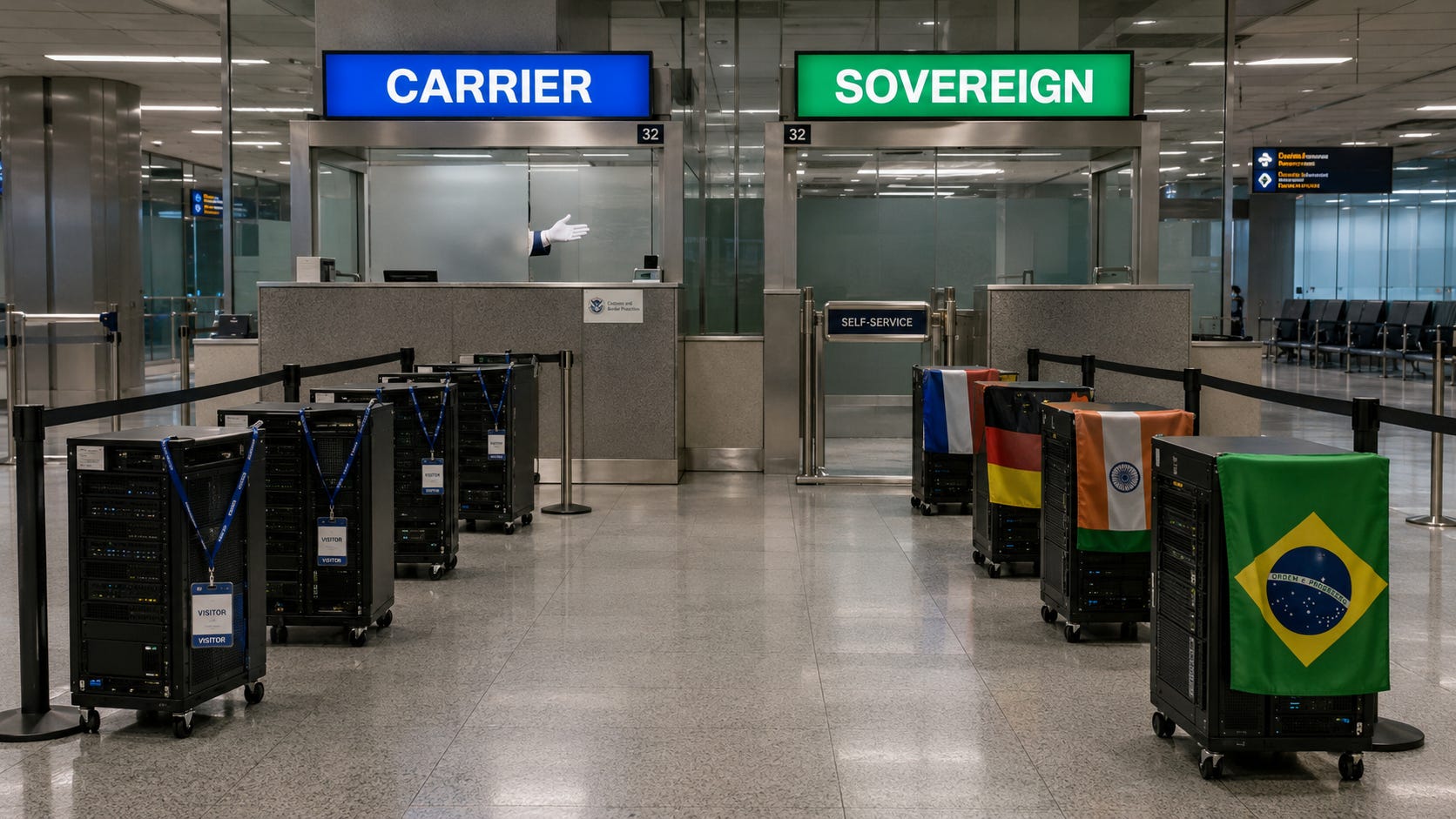
The number is $348. That is the monthly cost of running an autonomous coding agent on DeepSeek V4 Pro Max at 100 million output tokens, the approximate volume required to keep a multi-file engineering loop operating twenty-four hours a day across a medium-sized codebase. The equivalent workload on Claude Opus 4.7 costs $2,500. The models are not the same. Claude scores 87.6% on SWE-bench Verified. DeepSeek scores 80.6%. Seven points of benchmark difference. Seven times the price. For the buyer who needs to run agents continuously, around the clock, across hundreds of repositories, the question is no longer which model is better. The question is what seven points of benchmark premium is worth when multiplied across an engineering organisation’s entire monthly compute budget.
That question is producing two different answers in two different markets. And the answers are diverging, not converging.
Peter Steinberger shipped Clawdbot from Vienna in November 2025. Within seventy-two hours the repository had 60,000 GitHub stars. By April 2026 it had been renamed twice, first to Moltbot after Anthropic’s trademark lawyers sent a letter, then to OpenClaw because the lobster branding stuck. The repository now holds over 310,000 stars and 58,000 forks. It is the most-starred software project on GitHub, ahead of React, ahead of TensorFlow, ahead of every framework and tool in the history of the platform. OpenClaw runs on local hardware. It talks to any LLM. It costs only the inference tokens consumed. It carries no platform fee, no seat licence, no carrier margin.
The thesis that most observers hold about the agentic AI market is that open-source systems are slowly closing a capability gap with closed platforms, and that eventually the gap will narrow enough to make the closed platforms uncompetitive. This thesis is wrong. Not because the gap is not closing. It is. But because the closing gap is not producing convergence. It is producing partition. Open and closed agentic systems are not competing for the same buyer. They are solving different problems for different institutions with different constraints.
Claude Cowork sits on a desktop and handles files. OpenAI’s Codex operates in the background, opening applications, deploying agents in parallel. Devin owns the engineering loop end to end. These platforms are not optimising for cheapness. They are optimising for the total absorption of operational complexity. The user pays for convenience, for always-on availability, for the implicit guarantee that a well-capitalised company with liability insurance is carrying the cognitive load. The cost is opaque by design. The infrastructure is somebody else’s problem. The appeal is total platform coverage for a buyer who treats compute budgets the way a Fortune 500 CFO treats cloud spend: as an operating expense that somebody else manages.
Open-source agents are solving the inverse problem. Given that the buyer has its own compute, its own auditability requirements, and its own sovereignty constraints, how does it run agents without paying carrier rent? Steinberger’s answer, the answer now adopted by over 1,200 contributors to OpenClaw, is architectural neutrality. The agent talks to any model. It runs on any hardware. It reports to no external telemetry. The user pays for inference and electricity. Nothing else.
The cost asymmetry between these two architectures is not closing. It is hardening into geopolitical preference.
On April 17, 2026, the European Commission awarded its first Sovereignty Effectiveness Assurance Level procurement, EUR 180 million in sovereign cloud contracts distributed across four European consortia. The SEAL framework measures sovereignty across eight objectives, from supply chain transparency to compliance with EU data law. Three consortia reached SEAL-3, digital resilience. The fourth, a consortium including Proximus, S3NS, Clarence, and Mistral, reached SEAL-2, data sovereignty. Mistral’s position in the award was not incidental. In January 2026, France’s Ministry of the Armed Forces had already selected Mistral under a multi-year framework to deploy AI across all branches of the French military, on French infrastructure, under French authority. The framework was notified in December 2025 and steered by AMIAD, the ministry’s dedicated AI agency.
Ten days after the EU sovereign cloud award, on April 27, China’s National Development and Reform Commission blocked Meta’s approximately $2 billion acquisition of Manus AI. The same Manus that had launched as a closed, invite-only agentic platform with over 500,000 users on its waitlist. The NDRC decision was not about Manus’s capabilities. It was about sovereign execution. A US-owned company would not be permitted to acquire a Chinese-origin AI agent that processed sensitive user workflows, regardless of where Manus was incorporated or how its data was routed.
Two decisions. Two continents. The same structural logic. Neither buyer, whether a European defence ministry or a Chinese industrial regulator, was evaluating raw benchmark performance. Both were evaluating who controls the execution environment. And both concluded that control requires either open-weights models running on domestic infrastructure, or domestic companies operating under domestic authority. Not US-owned carrier platforms, however capable.
Steinberger, speaking at a developer conference in Berlin in March 2026, described the dynamic with a precision that most industry commentary lacks. The conversation is not about whether open models are as good as closed models, he said. The conversation is about whether your government will let you run a US-owned agent on sensitive data. For most governments outside the United States, the answer is already no.
The evidence supports his read. Chinese open-weight providers now account for over 45% of traffic on OpenRouter, the largest model routing platform. Enterprise deployment of open-weights models in production rose from 23% to 67% between early 2025 and early 2026. DeepSeek, Qwen, and GLM variants are flooding the market at price points that make closed-platform carrier margins look like a luxury surcharge. GLM-5.1 ships under an MIT-style licence. India is building sovereign LLM infrastructure. The EU’s SEAL framework explicitly prioritises European consortia with open-source commitments.
The closed platforms will not respond by shipping on-premises versions. That is the turn the market is missing. On-premises deployment of frontier models would cannibalise the SaaS margin that funds the training runs that produce the frontier capability. Anthropic’s entire economic model, and OpenAI’s, and Google’s, depends on the carrier margin: the spread between inference cost and the subscription or API price the enterprise pays for the bundled convenience of somebody else managing the compute. If you give the enterprise the model weights and let them run it on their own GPUs, you lose the margin. If you lose the margin, you cannot fund the next training run. If you cannot fund the next training run, you lose the seven-point benchmark lead that justifies the margin in the first place.
This is not a strategy failure. It is a structural constraint. The closed platforms are locked into the carrier model by their own capital requirements. And the open platforms are locked into the cost-transparent model by the sovereignty requirements of their buyers. Neither side can cross the line without destroying the economics that sustain it. The fork is not a temporary state. Within twenty-four months, it is permanent.
The most probable path, at roughly forty percent, is managed partition. The closed carrier platforms, Claude Cowork, Codex, Devin, dominate US Fortune 500 enterprise where the budget for AI tooling is unconstrained and the procurement decision optimises for uptime, liability transfer, and platform integration. Open systems, OpenClaw on DeepSeek or Qwen, Mistral’s sovereign stack, dominate EU government procurement, regulated compliance teams, developing-economy engineering organisations, and any team large enough to run its own GPUs. If you are positioning a product that serves both segments, this is the scenario that says you need two SKUs, two pricing models, and two go-to-market motions by 2028.
At thirty percent, the fork accelerates because a regulatory event forces it. The EU’s AI Act enforcement begins producing fines for opacity in agentic decision-making. Closed platforms that cannot provide full inference-chain auditability lose access to regulated European workloads. The open-weights segment captures not just sovereign government buyers but regulated private enterprise: banks, insurers, healthcare systems, any institution where a regulator demands reproducibility. If you are long the carrier platforms on the thesis that enterprise revenue grows indefinitely, this is the scenario where the addressable market ceiling drops by 30-40% as regulated industries exit the carrier model.
Twenty percent belongs to the world where the cost gap widens further because open-weights models close the remaining benchmark delta. DeepSeek V5 or a Qwen successor reaches 85% on SWE-bench Verified at V4 Flash pricing, roughly $0.14 per million input tokens. The two-point gap becomes economically irrelevant. Cost-sensitive US enterprises begin migrating off carrier platforms, not because they are forced to by regulators but because CFOs refuse to pay seven times the price for a two-point improvement. If you are a closed-platform investor and you are watching the next round of benchmark releases, this is the scenario that reprices the entire carrier margin thesis.
Ten percent covers the world where the closed platforms maintain a durable, widening capability lead through next-generation architectures that open-weights labs cannot replicate within eighteen months. Claude Mythos Preview, already scoring 93.9% on SWE-bench Verified, represents the leading edge of this possibility. If the next generation of closed models opens a fifteen-point gap rather than a seven-point gap, the carrier margin becomes defensible even for cost-sensitive buyers because the quality difference is no longer a rounding error. In this scenario, the fork narrows rather than widens, and the closed platforms recapture regulated and sovereign workloads by offering auditability features built on top of proprietary architecture.
What shifts these probabilities is not a single event but a sequence. Watch DeepSeek V5’s benchmark disclosure, expected in Q3 2026. If it closes the gap to within three points of Claude Opus 4.7, the cost-convergence scenario jumps from twenty to thirty-five percent overnight. Watch the EU AI Act’s first enforcement actions against agentic platforms, scheduled to begin in August 2026. If fines target opacity in agent decision chains, the regulatory-acceleration scenario gains probability immediately. Watch Anthropic’s and OpenAI’s next pricing moves. If either introduces a self-hosted enterprise tier before the end of 2026, it signals that the fork has become threatening enough to justify margin cannibalisation.
Steinberger’s OpenClaw will cross 400,000 GitHub stars before the summer ends. The number is a vanity metric. The $348 is not. At twenty-four-hour uptime, cost is not ideology. Cost is infrastructure. And infrastructure, once forked, does not reconverge.
ANNEX: WHICH SIDE OF THE FORK ARE YOU BUILDING ON?
Four scenarios for how the open-closed partition in agentic AI resolves over the next twenty-four months. Probabilities sum to 100%.
Managed Partition: 40%
If you are building an enterprise AI product and you are choosing your go-to-market architecture today, this is the scenario that demands two separate strategies. Closed carrier platforms own US Fortune 500 workloads where budget is unconstrained and the buyer optimises for total platform coverage. Open-weights agents own EU government, regulated industries, cost-sensitive engineering teams, and sovereign deployments. The line between these two markets hardens by mid-2027 into different procurement frameworks, different compliance requirements, and different pricing expectations. Your product needs two SKUs. Your sales team needs two pitches. Your infrastructure needs to support both carrier-integrated and self-hosted deployment. Companies that bet on convergence and build for only one side find themselves locked out of half the addressable market.
Quantitative variable to watch: EU SEAL-framework procurement volume. If the next SEAL call exceeds EUR 300M by Q1 2027, the sovereign segment is growing faster than the carrier segment in regulated markets. Secondary: OpenClaw monthly active deployments, currently estimated at 180,000. If this crosses 500,000 by December 2026, the self-hosted agentic market is larger than most analysts project.
Regulatory Acceleration: 30%
If you are running a closed-platform carrier and you have not built inference-chain auditability into your product roadmap, this is the scenario that forces a twelve-month emergency sprint. EU AI Act enforcement begins producing fines for opacity in autonomous agent decision-making. Regulated European enterprises, banks, insurers, and healthcare systems, cannot demonstrate compliance using closed platforms that do not expose full reasoning chains. They migrate to open-weights alternatives where they control the inference stack and can produce audit trails on demand. The addressable market for carrier platforms drops by 30-40% in Europe within eighteen months. For open-weights providers, this is the scenario where sovereign is not just a government buyer preference but a private-sector compliance requirement.
Quantitative variable to watch: EU AI Office enforcement docket. The first formal investigations under the AI Act’s general-purpose AI provisions are expected by August 2026. If the investigations name specific agentic platforms rather than model providers, the regulatory-acceleration scenario becomes probable within 90 days. Secondary: enterprise migration announcements from carrier to self-hosted. Two Fortune 500 exits from carrier platforms in the same quarter would confirm the trend.
Cost Convergence: 20%
If you are long the carrier margin thesis and you are watching the next benchmark cycle, this is the scenario where the margin collapses not because of regulation but because the benchmark gap disappears. DeepSeek V5 or a Qwen successor reaches 85% on SWE-bench Verified at Flash-tier pricing, roughly $0.14 per million input tokens. The remaining two-point gap between open and closed becomes economically irrelevant for any buyer running agents at scale. US enterprises that previously accepted the carrier premium begin migrating to self-hosted infrastructure because the CFO can no longer justify seven-times-cost for a two-point improvement. This is not a regulatory event. It is a spreadsheet event. The margin thesis dies in a quarterly budget review.
Quantitative variable to watch: DeepSeek V5 benchmark disclosure, expected Q3 2026. If V5 scores above 84% on SWE-bench Verified at V4 Flash pricing or below, probability of this scenario rises from 20% to 35%. If V5 scores below 82%, probability drops to 12%. Secondary: Claude or Codex pricing reductions larger than 30% in the same quarter as a major open-weights benchmark release would signal defensive pricing.
Closed Breakaway: 10%
If you are positioned in the open-weights ecosystem and you are betting that the gap will continue closing, this is the scenario where your bet is wrong. The next generation of closed models, building on architectures like Claude Mythos Preview at 93.9% on SWE-bench Verified, opens a fifteen-point rather than seven-point gap over open alternatives. The quality difference becomes large enough that even cost-sensitive and sovereignty-conscious buyers accept the carrier premium because the open-weights alternative is no longer a credible substitute for mission-critical workloads. In this world, the fork narrows. Closed platforms offer limited auditability concessions that satisfy regulators without exposing full model architecture. Open-weights agents retreat to non-critical workloads: testing, staging, internal tooling, development environments.
Quantitative variable to watch: Claude Mythos general availability date and production benchmark scores. If Mythos ships at scale in 2026 with production scores above 90% on SWE-bench Verified while the best open alternative remains below 82%, the closed-breakaway scenario rises to 20%. If Mythos ships below 88% or is delayed beyond Q1 2027, it drops to 5%.
Sources:
PJM, SWE-bench Verified Leaderboard, updated May 2026: Claude Opus 4.7 (Adaptive) 87.6%, DeepSeek V4 Pro Max 80.6%.
DeepSeek API Documentation, pricing effective April 2026: V4 Pro Max $3.48/M output tokens (list price).
Anthropic API Pricing, May 2026: Claude Opus 4.6 $25/M output tokens.
GitHub, openclaw/openclaw repository statistics, April 2026: 310,000+ stars, 58,000+ forks.
European Commission, “Commission advances cloud sovereignty through strategic procurement,” April 17, 2026.
French Ministry of the Armed Forces press release, January 8, 2026: Mistral AI framework agreement notified December 16, 2025.
China National Development and Reform Commission, Manus AI acquisition decision, April 27, 2026.
OpenRouter traffic statistics, Q1 2026: Chinese open-weight providers 45%+ of platform traffic.
Open-Source AI Model Market Research Report 2026, GlobeNewsWire, April 14, 2026.
KDnuggets, “OpenClaw Explained,” 2026.
SimilarLabs, “OpenClaw: Why 2026’s Hottest AI Agent Project Got 60K GitHub Stars in 72 Hours,” 2026.
Buildfastwithai, “Best AI Models: April + May 2026 Leaderboard,” May 2026.
Disclaimer: This report is published by Scenarica Intelligence for informational purposes only. It does not constitute investment advice, a solicitation to buy or sell any financial instrument, or a recommendation regarding any particular investment strategy. Scenarica Intelligence is not a registered investment adviser or broker-dealer. All scenario probabilities and assessments represent the analytical judgment of Scenarica Intelligence and are subject to change without notice. Past performance of any asset or strategy discussed does not guarantee future results. Readers should conduct their own due diligence and consult with qualified financial advisers before making investment decisions.
Scenarica Premium: The full Scenarica suite includes Geopolitics, Economy, Bitcoin, AI, and Sunday Edition.
Scenarica Intelligence
We don’t predict the future. We price it.