

The Form
Five pieces of paper that mattered more than what they described.

Five pieces of paper did more work this week than anyone who signed them. The United States and Iran initialled a memorandum of understanding that gives sixty days to clear mines the Pentagon says will take six months. A compliance form at every advisory firm in America may quietly reclassify Bitcoin from hedge to speculative asset. Meta generated eight thousand calendar invites, each containing a case number and no words, and called it a restructuring. SpaceX filed an S-1 that valued eighteen thousand employees at more than the entire aerospace industry combined. Intuit signed two AI partnership agreements and three thousand severance letters on the same day, outsourcing forty years of tax knowledge between signatures. When the paperwork is the mechanism, the argument underneath it is already over.
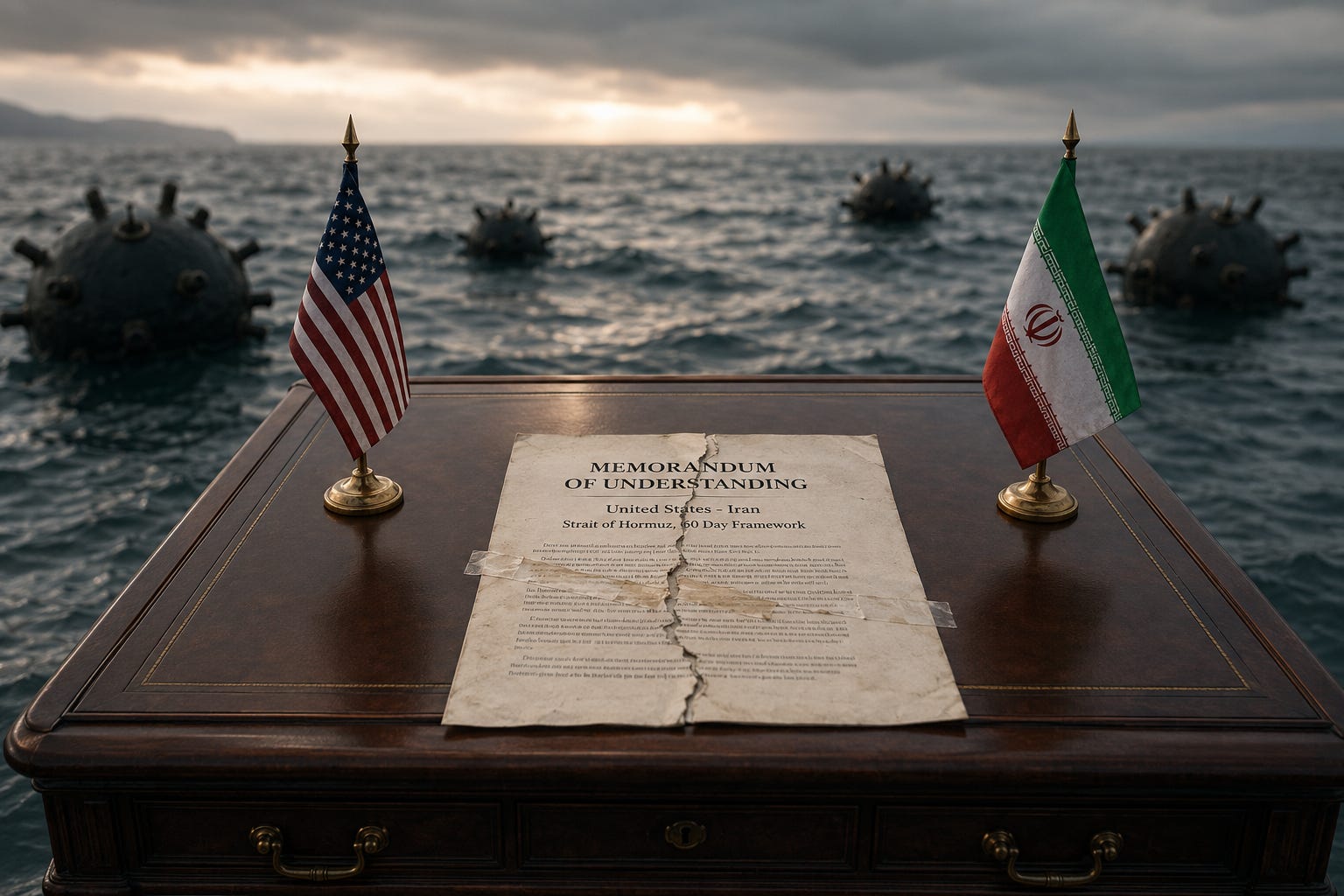
The MOU that Witkoff, Kushner, and Ghalibaf reportedly approved is fourteen points long. Iran clears the mines. The United States lifts its naval blockade and issues sanctions waivers. Both sides declare the war over. Then, during the sixty-day window, they negotiate the hard questions: enrichment, stockpiles, frozen assets, Hezbollah. Trump called the odds “a solid 50/50.” Three forces are competing to shape the outcome. Economic pressure pulling toward a deal. Security establishments on both sides pulling toward collapse. Israel pulling toward a harder deal that addresses the nuclear file first. The MOU is real. The peace is not. And the distance between the two will be written in satellite imagery of the strait within a fortnight, where the presence or absence of mine-clearing vessels will tell you more than anything said at a podium.
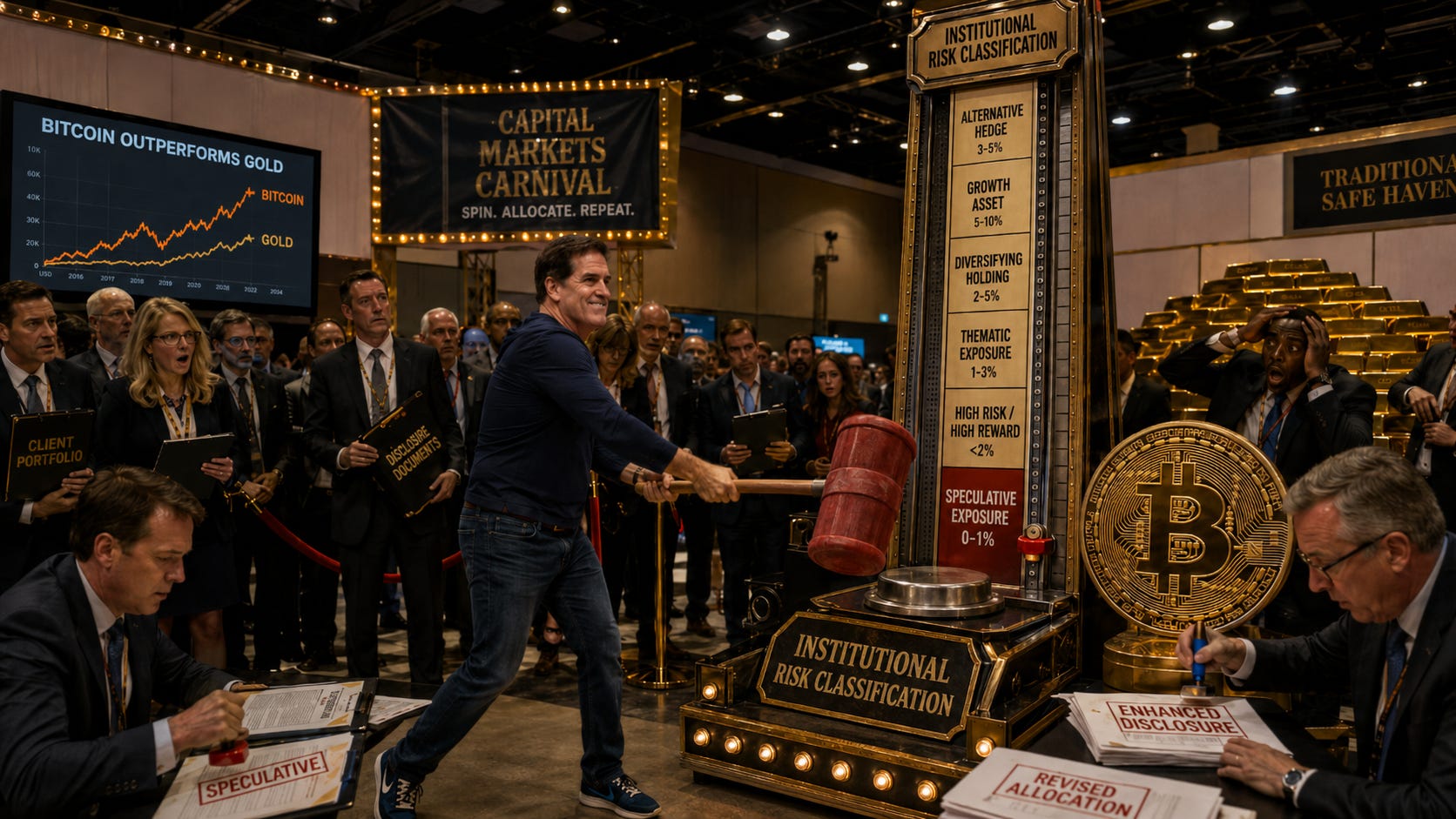
Thirty-two percent of US financial advisors allocated to crypto in 2025. On 21 May, Mark Cuban said he had sold 80 percent of his Bitcoin and called it a failed hedge. The price barely moved. The compliance form did. At every advisory firm, an Asset Classification and Suitability Determination sits between a three-to-five-percent allocation and a one-to-two-percent cap requiring enhanced documentation. Cuban gave compliance officers a quotable, timestamped reason to reclassify. In a system built on permission, the permission is the asset.
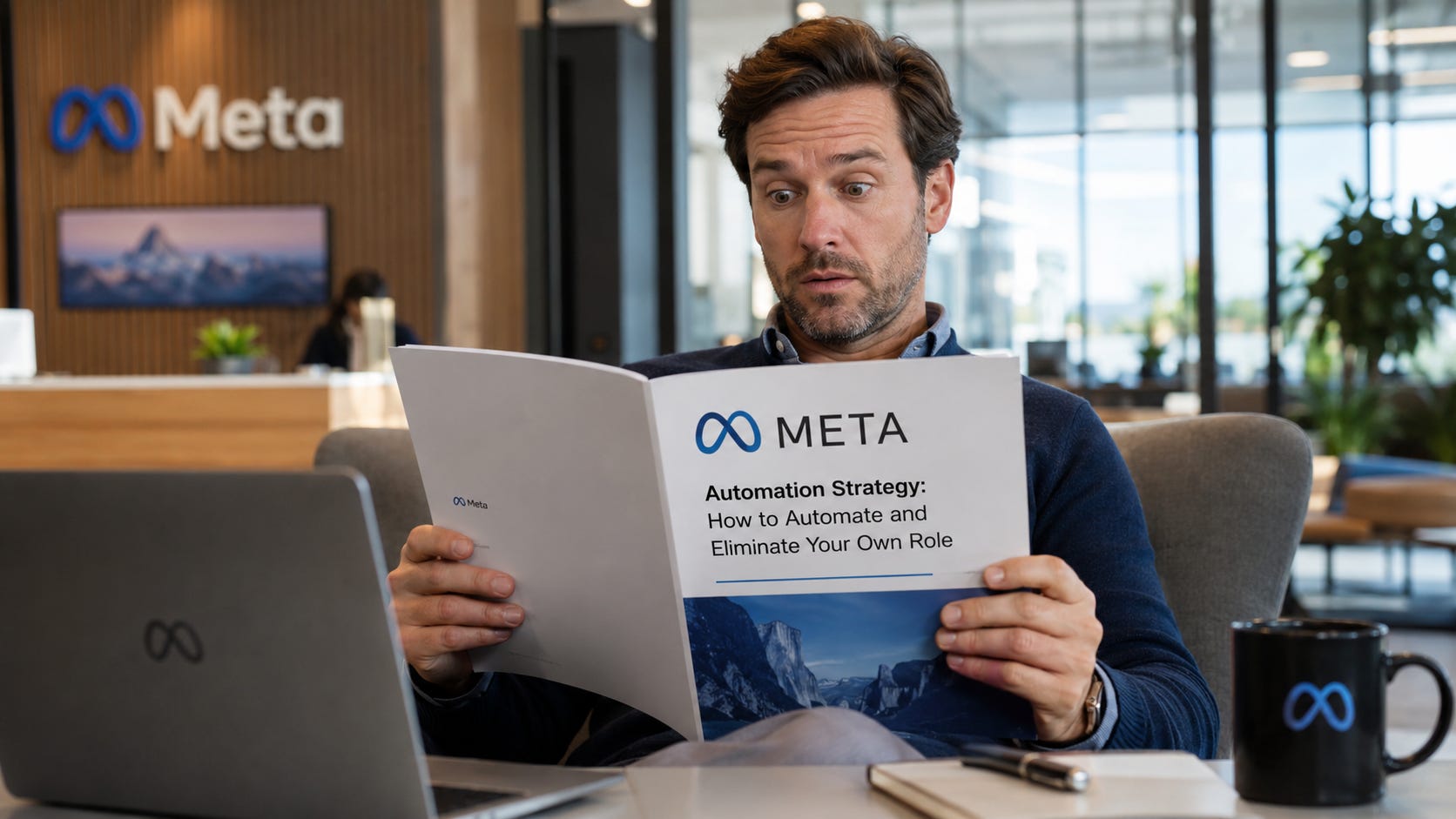
On 20 May, Meta cut 8,000 employees and raised its capital expenditure guidance to $125 to $145 billion. The ratio is 5.4 to 1: for every dollar Meta spends on a human worker, $5.40 goes to AI infrastructure designed to make that worker unnecessary. An Nvidia vice president admitted this month that compute costs currently exceed employee costs at his own company. The firms replicating this model are not yet saving money. They are betting the machine gets cheaper faster than the human gets more productive. The stock went up.
The Everything Company Goes Public
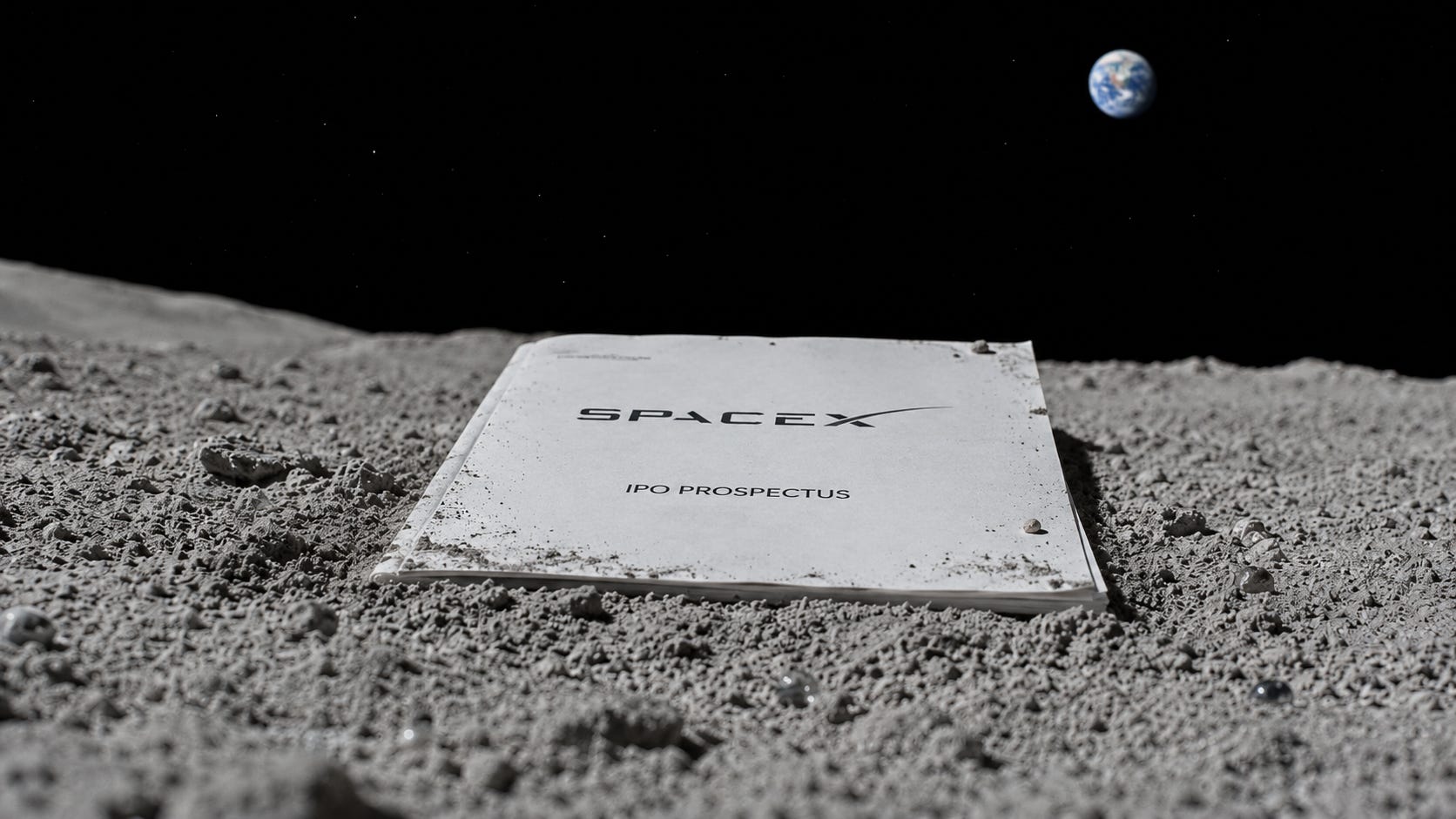
SpaceX is worth roughly twice every publicly listed aerospace and defence company on earth combined. The S-1 filed on 20 May describes a satellite broadband monopoly generating $4.42 billion in operating income, a launch monopoly that flew 165 missions last year, and an AI laboratory responsible for the entire consolidated net loss. Nasdaq’s fast-entry rules could place SPCX in the index within fifteen trading days, forcing passive funds to acquire roughly 19 percent of the float. You will own this stock by summer whether you choose to or not.

If 55 percent of your working hours go to pattern recognition and data synthesis, read this one slowly. On 20 May, Intuit cut 3,000 people and signed AI partnerships with Anthropic and OpenAI the same day. The intelligence layer, forty years of encoded tax knowledge, was outsourced. The interface layer, the human expert a client calls by name, survived. The piece introduces a diagnostic any knowledge worker can run in twenty minutes against their own role. The line it draws is not comfortable, and the piece makes a persuasive case that it moves.
Five forms. Five filings. Every outcome was on the page before anyone read it.
Which of these five forms would you refuse to sign? Hit reply.
Scenarica Intelligence
We don’t predict the future. We price it.
A characteristically sharp piece, and the framing line carries it — paperwork as the mechanism rather than the record. That observation will outlast the news cycle that prompted it.
The Intuit case rewards even closer reading. The detail that has stayed with me from the same day's filing is one your piece points toward without quite settling on: Intuit cut three thousand people and raised full-year guidance in the same announcement. Twenty-three eighty to twenty-three eighty-five adjusted earnings per share, twenty-one point three four to twenty-one point three seven billion in revenue — both above consensus. A company shedding seventeen percent of its workforce while telling the market it will earn more is not a company in distress. It is a company stating, in the language Wall Street reads most carefully, that the bet has already been made.
Some of the headcount would have gone regardless. The observation has been circulating since Davos this year. AI provides the cleaner narrative. The paperwork was always going to arrive. The story it now tells is the one that prices well.
Which is the deeper version of your thesis. The argument was over before the form was signed. It was just easier to sign once the form had a name.
As for which form I would refuse to sign — I am not sure any of us get to refuse anymore.
We just get to read what we signed.