

Load-Bearing Walls
Remove any one of them and something you use every day stops working.

Ask what element coats the screen you are reading this on. You do not know. Ask how many companies are carrying American GDP growth. You have not checked. Friday’s brief was about blueprints that broke on contact with reality. Monday’s is about what those blueprints were sitting on. Every piece today is about something load-bearing that nobody labeled. An element you have never heard of makes every touchscreen work. Four balance sheets carry three quarters of GDP growth. Twenty thousand anonymous nodes govern a trillion-dollar network. The pieces that follow are the things underneath the visible floor.

Zero. That is how many tonnes of indium the United States produced domestically in 2025. Indium is element 49, the metal behind the transparent coating on every touchscreen on earth. China controls seventy percent of global supply and placed it under export licensing last February. The price is up thirty-nine percent. There is no strategic stockpile. There is no congressional hearing. There is no substitute at commercial scale. The piece walks through a dependency so complete and so invisible that the people holding the screens have never heard the name of what makes them work.
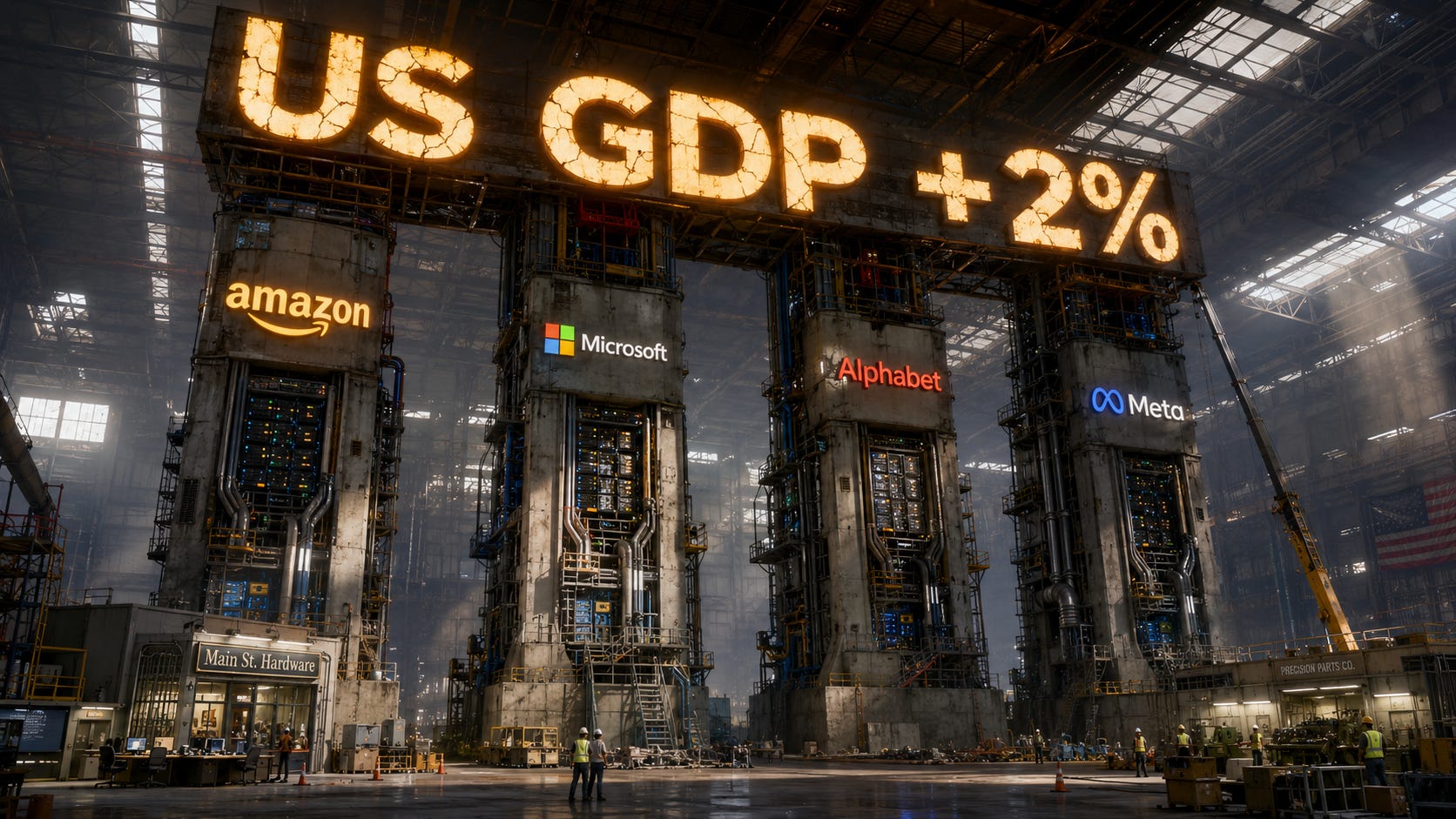
GDP grew two percent in Q1. Remove the AI infrastructure spending of Amazon, Microsoft, Alphabet, and Meta, and it grew half a percent. Those four companies plan to spend $725 billion on data centres in 2026, and that spending now accounts for three quarters of measured economic growth. The economy is not growing. Four balance sheets are growing. The piece argues that the GDP number the Fed uses to set monetary policy is effectively measuring the capex decisions of four executives and reporting it as the health of a continent.

In a coat closet in Berlin, a Raspberry Pi the size of a credit card has been verifying every Bitcoin transaction for nineteen months. It earns nothing. Its owner checks it once a week. There are roughly fifty thousand machines like it, and they are the most important governance mechanism in Bitcoin: they decide which blocks count. Right now, one in five of those nodes is running protest software called Bitcoin Knots that rejects transactions Bitcoin Core would accept. The piece covers the most consequential governance fight since the 2017 block size wars, conducted entirely by people nobody elected.
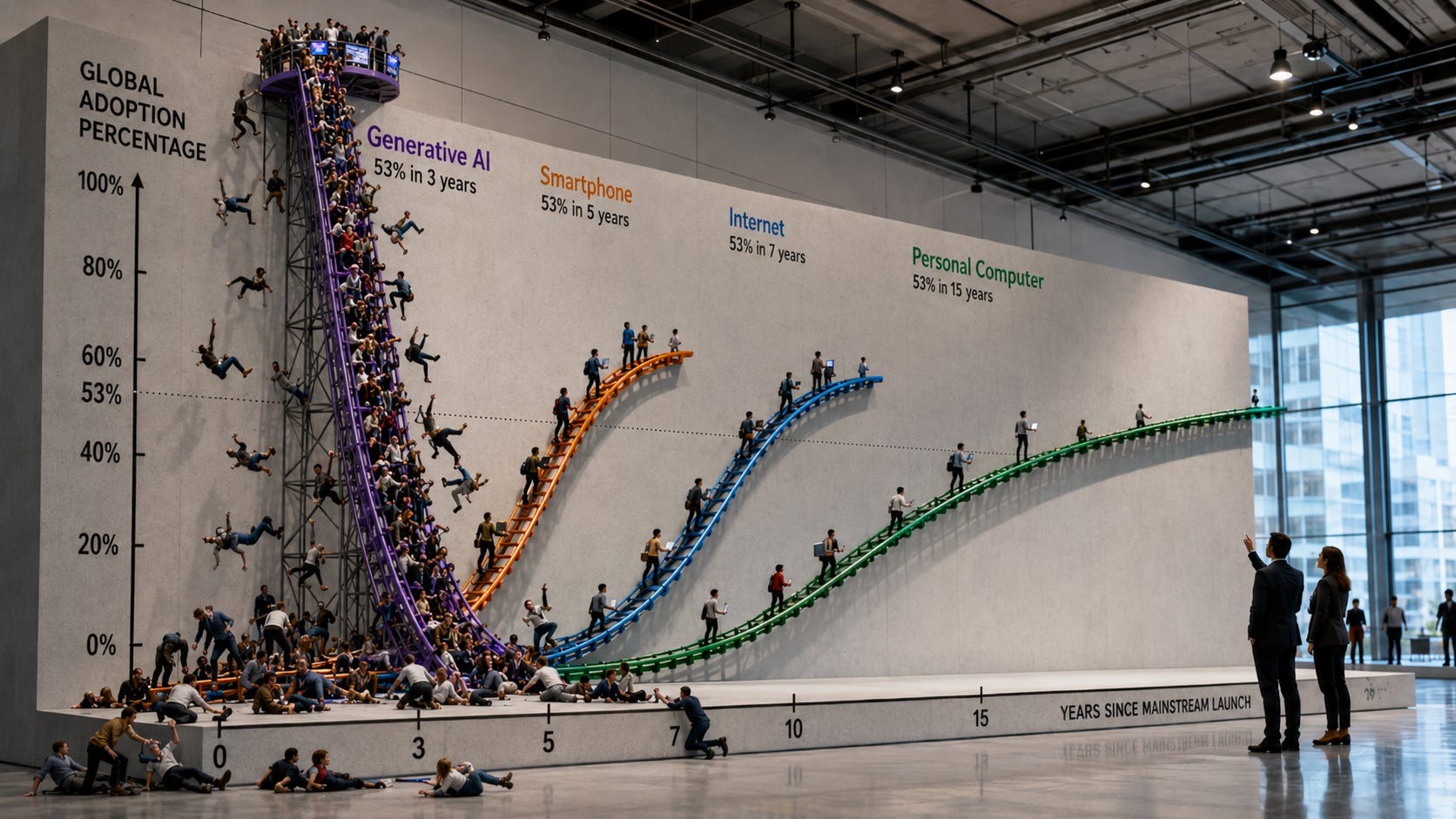
Three years from ChatGPT’s launch to the moment Stanford confirmed that generative AI had crossed fifty-three percent global adoption. No technology in recorded history has reached majority adoption faster. But the number is diagnostic, not celebratory. AI app subscribers churn thirty percent faster than subscribers to conventional software. ChatGPT converts below two percent of its 900 million weekly users to paying customers. Eighty percent of companies using AI report no measurable productivity gain. The piece asks whether fifty-three percent was a waypoint or a peak, and the historical answer is not reassuring.

Google’s share of the AI chatbot market dropped from sixty-nine percent to forty-five percent in twelve months. Perplexity now processes more than a billion queries a month. The piece frames what is happening to search through the lens of unbundling: the same force that dismantled newspapers and cable television is now pulling apart the search engine, one query type at a time. Google’s dilemma is that its own AI Overviews cannibalise the ad-supported links beneath them. The unbundling is not coming from outside. Google is doing it to itself.
Five pieces. Five invisible foundations. The indium piece is the one you will not be able to stop thinking about.
Which of these five hidden loads would hit your own industry hardest if it gave way? Reply with the one.
Scenarica Intelligence
We don’t predict the future. We price it.